
Who Gets to Be Original? On the words we use to introduce Moroccan art.
What do we miss when we describe Moroccan art through familiar Western names? Atay Atelier takes a closer look at Hassan Hajjaj’s work.
It’s lovely to have you here for our first newsletter.
I’m Saloua, and I co-founded Atay Atelier with Saber. You probably know us through Instagram, where we share stories about modern and contemporary Moroccan art. If you’ve been following us there, it’s nice to have a little more space to share our stories with you here.
Through Atay Atelier, we want to give Moroccan art the platform it deserves. Instagram helps us reach people and spark curiosity. But between the pace of the feed and the (limited!) space in a caption, we can’t always share everything we would like to. There is often more behind a post: a conversation with an artist, our own research, and decisions about how to tell a story. This newsletter is a place to share that with you.
This first letter is about something we return to with every post: the words we use to introduce an artist. They can make you curious, but they also guide what you see in the work. That has interested me for quite some time.
Who inspires, who follows?
In 2022, I wrote my master’s thesis on how modern and contemporary Moroccan art is framed. I looked at how displays and the texts around them shape the story visitors take away. It’s something I studied as a researcher then, but is also relevant in my current work for Atay Atelier. One observation has stayed with me: The texts I studied described how European artists, such as Matisse and Delacroix, found inspiration in Morocco. As a reader, you follow a story about an artist who travels, then discovers something, and brings it into his own work.
When those same texts introduced Moroccan artists, the story began elsewhere. Their work was explained through European and American art movements, such as the Bauhaus and Pop Art. Readers were pointed towards something they might already know from Western art.
Both descriptions are about artists discovering and developing ideas. Yet they give those artists different roles. With the European artist, the story starts with his own way of seeing. With the Moroccan artist, it starts with an existing movement and its supposed influence on his work. Those influences may be real and worth discussing. But when the story is repeatedly told this way, an imbalance emerges. European and American artists appear as those creating something new, Moroccan artists mainly as those building on their ideas. Their own ideas and sources receive less attention.
What stood out to me was where the story began. Even when the subject was Moroccan art, the reader was often asked to start with a European or American artist or movement.
The choices behind our captions
That made me think about what a comparison can do in a caption. Sometimes we mention a familiar artist because we see a resemblance that might help someone who’s seeing the work for the first time. The comparison can be useful, but it can also shape what the receiver notices first.
Because we share our stories mainly through Instagram, one image and a few sentences may be someone’s first introduction to an artist. The words we choose, and the way we frame a story, are an essential part of our work at Atay Atelier.
We’re always looking for a clear, accessible way to introduce the work. A familiar name can help us get an idea across quickly. But we also need to consider whether that comparison gives a fair picture of the work we want to share. Let me take you through an example:
Take a closer look
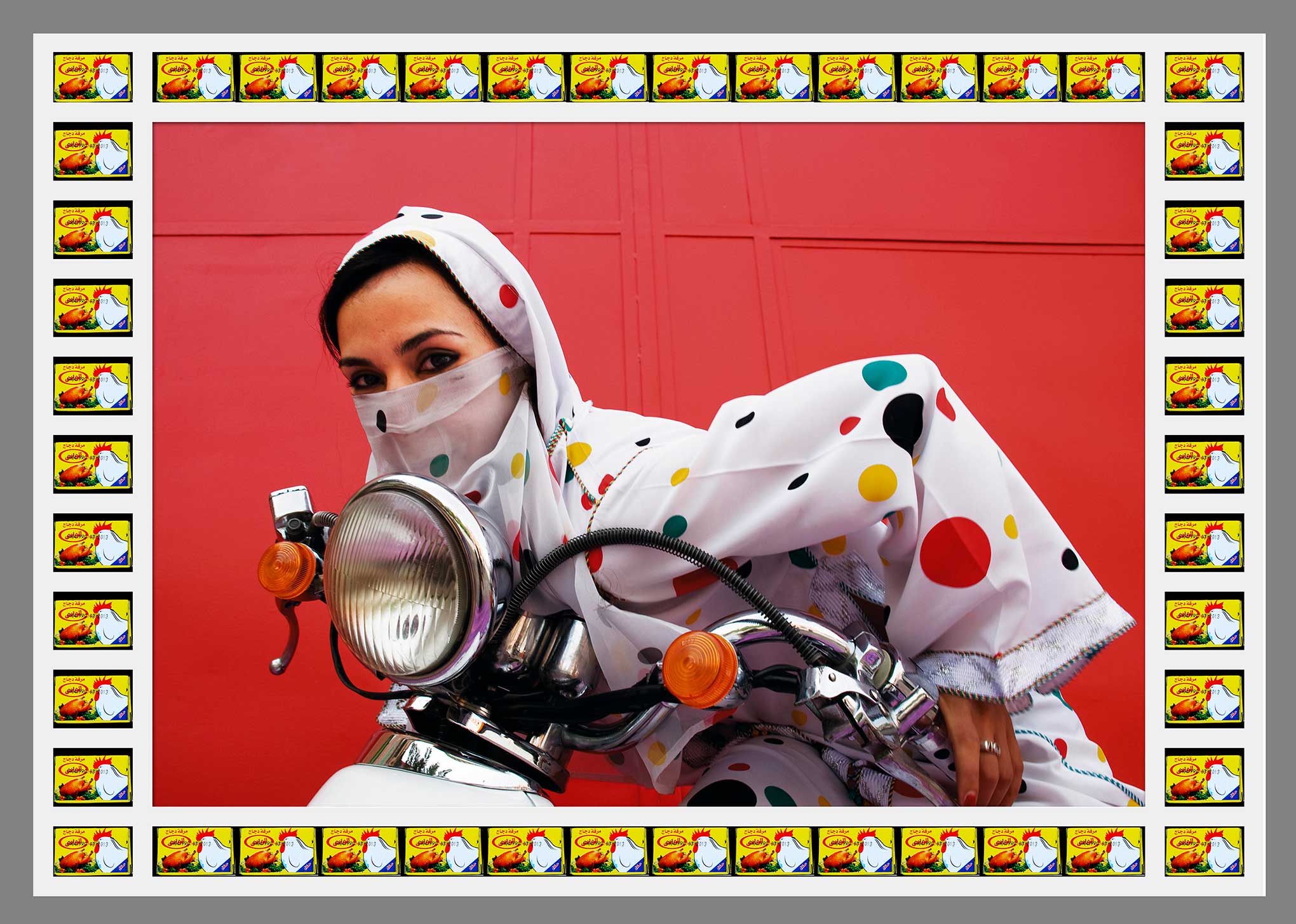
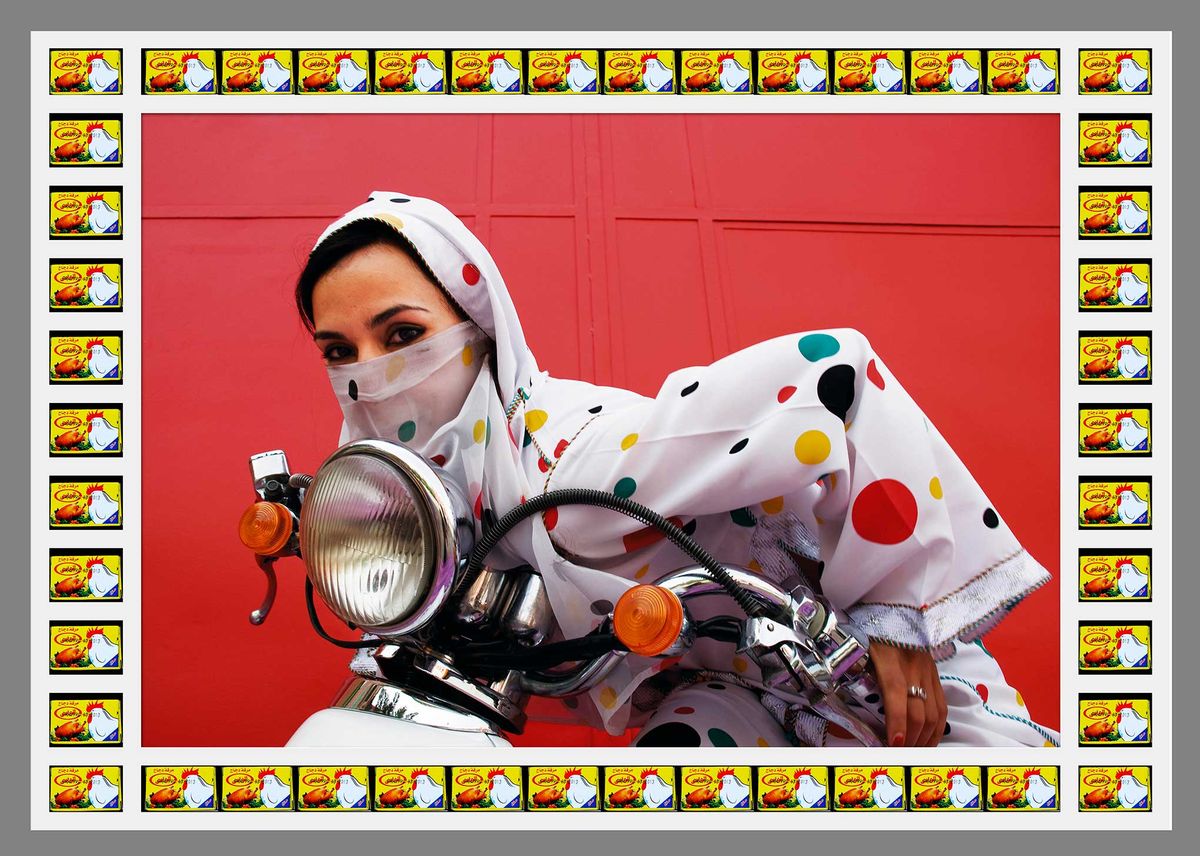
Spend a moment with this image. A woman leans forward over a motorbike and looks straight at us. Her white clothing, covered in colourful dots, stands out against the red background. Around the photograph, a yellow stock-cube packet repeats. You might recognise it.
Now read this description: Hassan Hajjaj, the Moroccan Andy Warhol
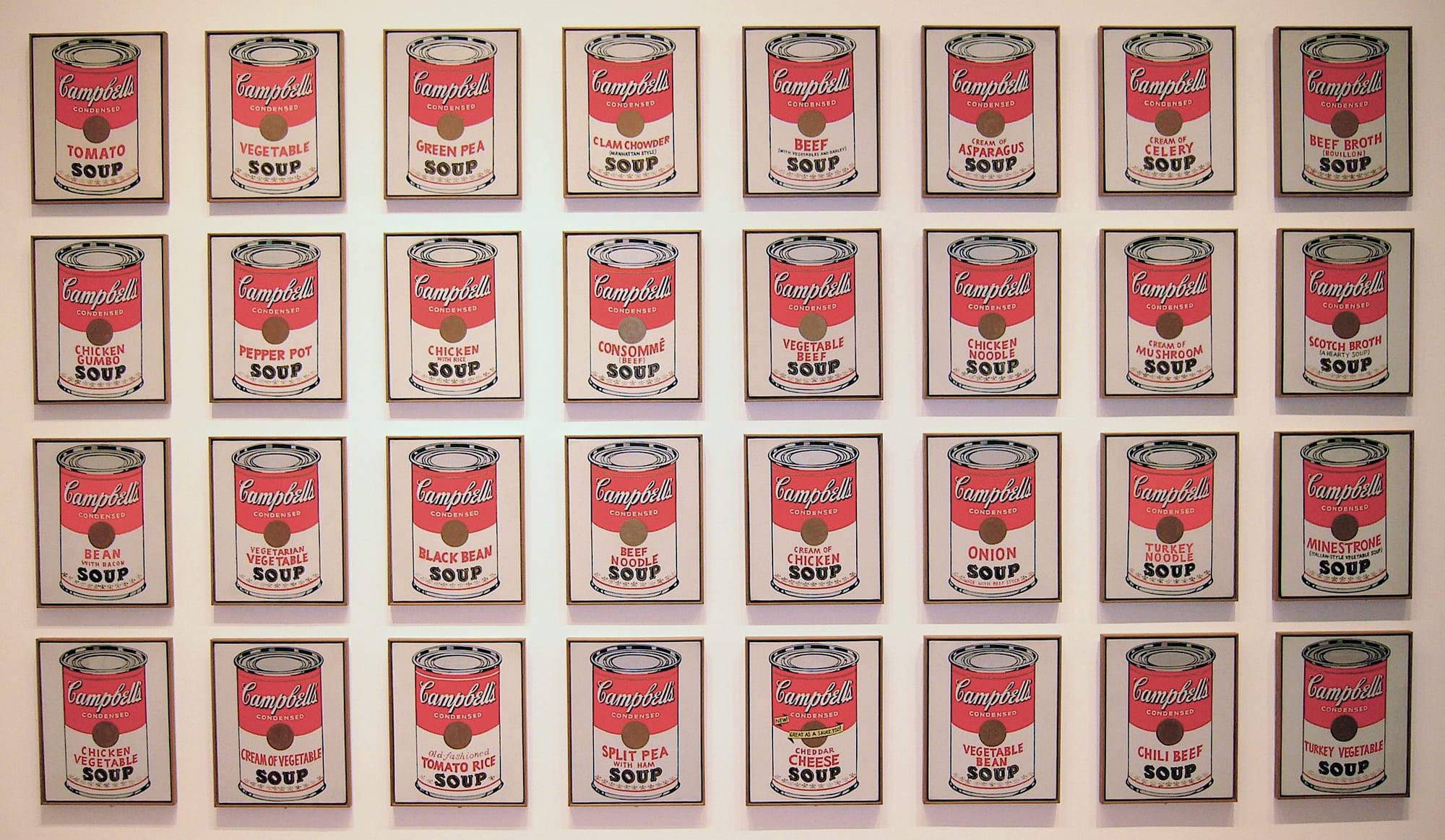
Andy Warhol was an American Pop artist known for bringing everyday products and advertising into his art, often using bright colours and repetition. Calling Hajjaj “the Moroccan Andy Warhol” may therefore draw your attention to the colourful packaging around the photograph. It’s an easy comparison to reach for, and we’ve used it ourselves.
But let’s turn back to the woman. Her direct gaze gives the portrait a confident, playful feel. Knowing more about the series adds to that impression. In an article about Kesh Angels, Fleur Macdonald describes women riding their motorbikes to work in Marrakech. Many are friends of Hajjaj’s and work as henna artists. He designed the clothing for the photographs himself.¹ Knowing this about the series, I read her confident pose differently. The portrait belongs to a world of women working and moving through Marrakech’s streets, a context the Warhol comparison does little to explain, but is a crucial part to understand the work.
When comparisons become labels
Comparing the repeated packaging to Pop Art can help us understand a certain part of this work. But repeatedly calling Hajjaj “the Moroccan Andy Warhol”, as people often do when writing about him, goes further: it sums up his work through someone else.
A familiar name can also make readers take an artist more seriously. By placing someone alongside an established artist, we signal that their work deserves attention. But there is a problem when the same names remain the standard we judge everyone else by. Those names start to form part of the canon: the artists and works that appear repeatedly in museums, books and education. They give us a shared language. But if we always introduce other artists through them, we keep returning to the same centre. Other artists and artistic ideas should be able to lead the story too.
Words carry weight
For Atay Atelier, this means thinking carefully about how we use comparisons and when they help. A familiar name should never replace a fuller introduction to an artist and their work. Sometimes that means reading more (and scrolling a little less), sharing more background, or taking another look at our own words. With every story, we help shape how modern and contemporary Moroccan art is explained and seen.
The next time you read a caption or a gallery text, take a moment to notice the words alongside the work. They guide your attention and tell a story. Words carry weight. They deserve thought when we read them, and just as much care when we write them.
Saloua
Atay Atelier
Have thoughts on this, or want to respond to this newsletter? Just reply to this email or write to us at info@atayatelier.com. We’d love to hear from you. You can also slide into our DM's (;
¹ Fleur Macdonald, “Hassan Hajjaj makes Marrakesh go pop”, 1843, The Economist, 25 October 2017.